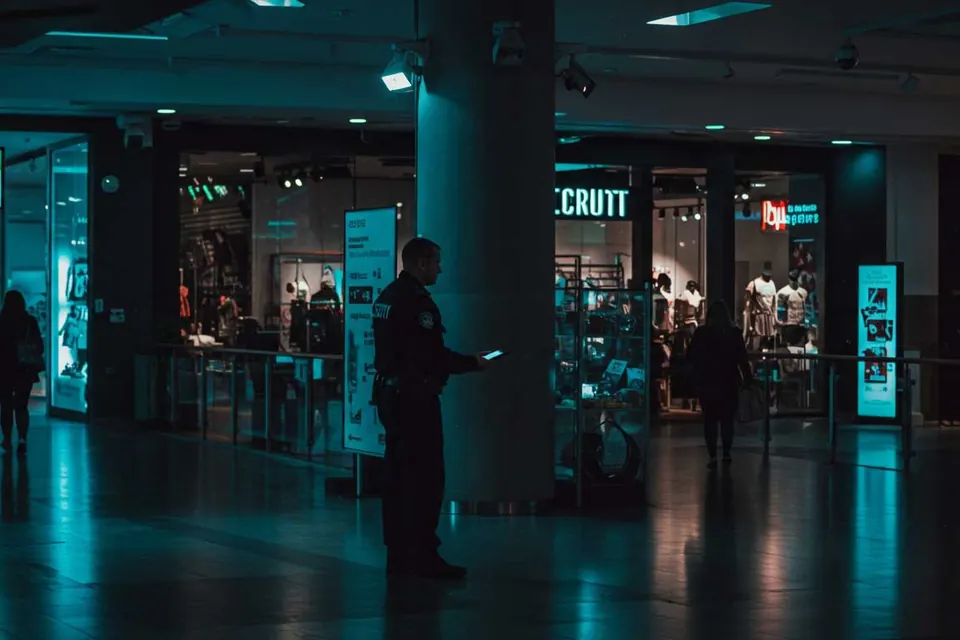
For a retailer, theft is about more than lost stock. It eats into margins, wears down staff morale and can affect how safe customers feel. In Brussels, settings vary widely: big chain stores on Rue Neuve, boutiques on Avenue de la Toison d’Or and Avenue Louise, shops along Chaussée d’Ixelles, shopping centres such as Woluwe Shopping, Westland Shopping in Anderlecht or Basilix in Berchem-Sainte-Agathe, and of course local neighbourhood shops. This guide helps you build effective prevention that protects your store while keeping it welcoming.
Understanding shrinkage
Shrinkage is the gap between book stock and actual stock. It has several causes, and not all of them are shoplifting:
- External theft by customers, whether opportunistic or organised.
- Administrative errors: mistakes in receiving, labelling, data entry or at the till.
- Breakages and damaged goods that go unrecorded.
- Internal fraud, rarer but not to be ignored.
Before stepping up security, it pays to identify where losses are really occurring: which aisles, which products, which times. Analysing the store layout and peak hours lets you put cover where it matters most.
Discreet or visible presence?
A uniformed guard at the door and a plain-clothes guard on the shop floor serve different purposes.
- A visible presence: a guard who can be seen at the entrance or in the aisles signals clearly that the store is protected. It discourages opportunistic theft and reassures staff.
- A discreet presence: a guard who observes without drawing attention can spot suspicious behaviour and more sophisticated techniques, without changing the atmosphere in the store.
The right set-up often combines the two, depending on the size of the store, the type of goods and the time of year. Either way, attitude matters: a calm, professional and approachable guard builds customer confidence rather than making people uneasy.
What a security guard can and cannot do
Important: this section is an informative summary and does not constitute legal advice. The precise rules are set out in the Act of 2 October 2017 regulating private and special security and its implementing decrees: check the official texts and the information published by the FPS Home Affairs.
In Belgium, in-store guarding is regulated by law. The company must be licensed by the FPS Home Affairs (SPF Intérieur / FOD Binnenlandse Zaken), and its guards must meet training requirements and hold an identification card. A security guard does not have police powers. In practice, and in general terms:
- they can observe, prevent, deter and talk to a customer;
- they cannot force anyone to open their bag or be searched against their will;
- they must avoid any use of force, except in the very limited cases provided for by law, and always proportionately;
- if they witness an offence, they alert the police, who alone are competent to take matters further.
These limits protect both your customers and your brand. A well-trained guard knows how to respect them while remaining effective.
De-escalation: protecting without inflaming
A theft or a confrontation can quickly get out of hand, especially in a crowded store. The priority is everyone’s safety: customers, staff and the guard. De-escalation rests on a few principles:
- Approach the person calmly and courteously, away from other customers if possible.
- Use clear, non-accusatory language, without humiliating anyone.
- Keep a safe distance and never physically block an exit.
- Know when to stop if the situation becomes dangerous: no item is worth an injury.
- Document the incident and call the police if necessary.
Till procedures and store organisation
Security is not just the guard’s job. How the store is organised plays a decisive role:
- At the till: limit the cash on hand, make regular deposits, watch refunds and exchanges closely and look out for distraction tactics.
- On the shop floor: valuable products near the tills or in display cases, clear sightlines down the aisles, supervised fitting rooms.
- In the stockroom: access limited to staff, checks on deliveries and on goods leaving the premises.
- Day to day: staff who greet every customer and stay visible on the shop floor are one of the most effective forms of prevention.
A guard can support these procedures, for example at opening, at closing or during cash transfers.
Sales, the festive season and other busy periods
Busy periods such as the sales, December or certain weekends combine several risk factors: crowded stores, stretched staff, queues and packed fitting rooms. This is the time to strengthen your arrangements temporarily:
- an extra guard on the shop floor or at the entrance during peak hours;
- briefing staff on high-risk products and procedures;
- managing queues and footfall at the entrance to avoid congestion;
- supporting staff at moments of tension.
On major shopping streets and in arcades, coordinating with neighbouring shops and the shopping centre manager can also help.
Building your prevention plan in five steps
Theft prevention works best when it follows a structured approach rather than case-by-case reactions. Here is the method we follow with retailers:
- Observe: visit the store and analyse the layout, low-visibility areas, fitting rooms, stockrooms and peak hours.
- Prioritise: identify the most exposed products and the most sensitive times, drawing on your stocktakes and your staff’s experience.
- Define the arrangements: visible, discreet or combined presence, hours, seasonal reinforcements, clear instructions and incident-handling protocols.
- Train and coordinate: a joint briefing for guards and staff, a clear division of roles, and alignment with your internal systems and procedures.
- Measure and adjust: service reports, incident reviews and practical recommendations, so the arrangements evolve with your business.
This approach works just as well for an independent boutique as for a supermarket or a shopping arcade. Discover the sectors we serve.
Working with your CCTV
Cameras and electronic article surveillance are valuable allies, provided they are actually used. OWL Security does not install this equipment, but our guards work with your existing systems: responding to gate alerts, liaising with whoever monitors the footage where this is planned, and preserving relevant evidence after an incident, in line with the rules on cameras and privacy. Every incident is written up in a report with key observations and, where necessary, recommendations for improvement.
If you also manage offices or a head office, our guide to manned guarding in Brussels will be useful. We operate in every municipality of the Region, from Ixelles to Woluwe-Saint-Lambert.
Want to reduce shrinkage in your store without spoiling the customer experience? Request your free security assessment or call us on +32 2 880 59 19: we will analyse your store and propose tailored arrangements, with no obligation. Find out more about our retail security service in Brussels.